Introduction
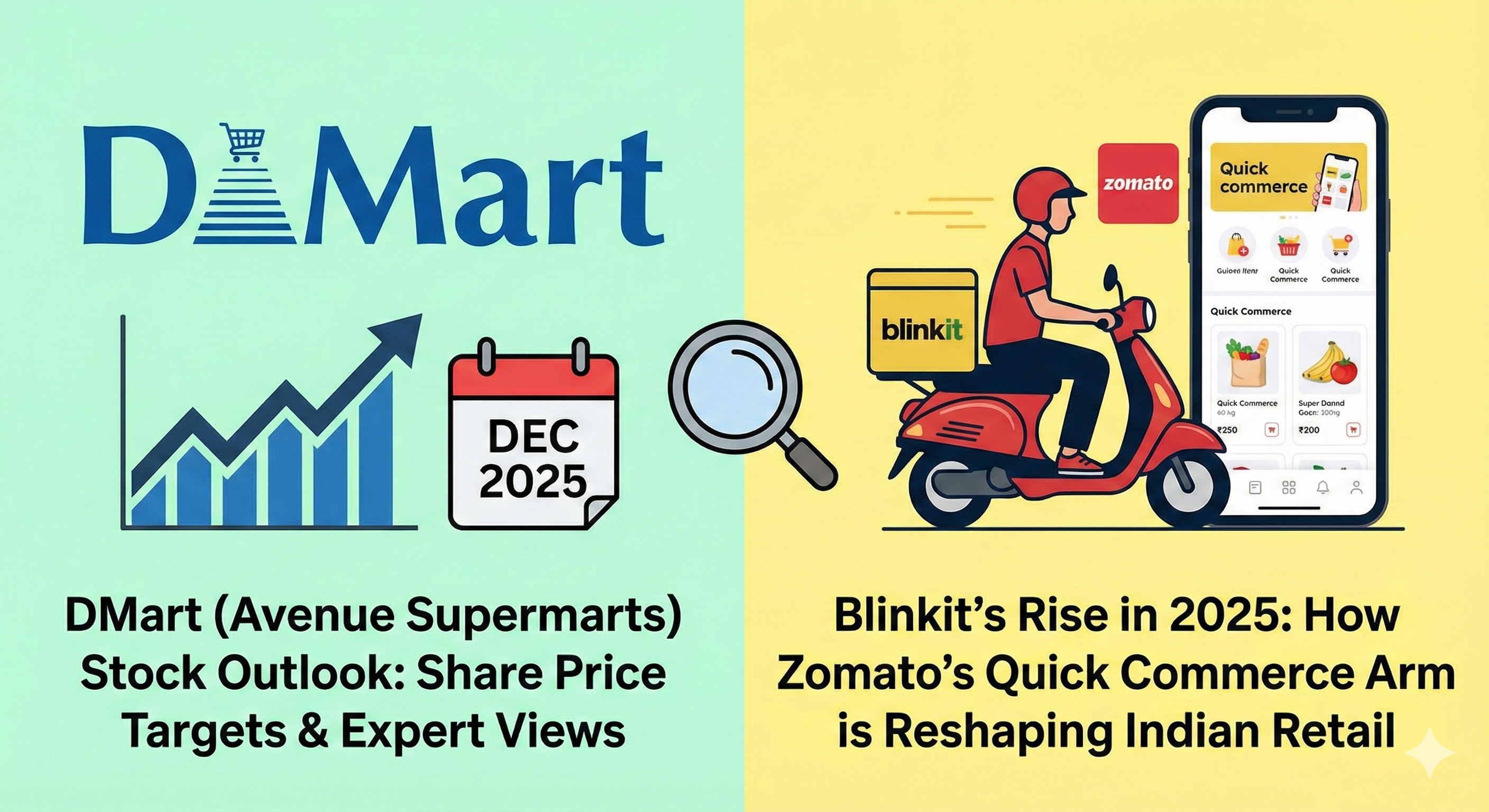
In 2025, Blinkit — the quick-commerce unit of Eternal Limited (formerly Zomato) — has emerged as a game changer in how Indians shop for daily essentials. Blinkit isn’t just delivering groceries fast anymore; it is redefining what retail means in Indian cities. This article explores how Blinkit’s rise is reshaping retail, why it matters, and what trends to watch.
What is Blinkit — From Startup to Quick Commerce Powerhouse
Blinkit began life as Grofers, founded in 2013 to bring online grocery delivery to Indian homes. Wikipedia+1
- In 2021, Grofers rebranded as Blinkit and embraced the “quick commerce” model — promising fast deliveries (within minutes) instead of traditional multi-day waits. Wikipedia+1
- Its parent company is Eternal Ltd. (formerly Zomato). After acquisition, Blinkit became the quick-commerce arm under a larger umbrella that includes food delivery, cloud kitchens, and more. Wikipedia+2Wikipedia+2
- As of March 2025, Blinkit serves around 153 cities across India. Wikipedia+1
This transformation from a normal grocery startup into a hyper-local rapid delivery service laid the foundation for the major disruption 2025 is witnessing.
What Makes Blinkit’s Model Work: Logistics, Dark Stores & Tech
The engine behind Blinkit’s success rests on three key pillars: hyper-local warehousing, smart logistics, and a strong focus on customer convenience. IIDE – The Digital School+2Goteso+2
- Dark Stores: Instead of operating like a regular warehouse, Blinkit maintains small, strategically placed mini-warehouses (dark stores) in dense urban areas. This ensures items are physically close to users when orders are placed. Goteso+2WareIQ+2
- Fast Delivery Logistics: Blinkit promises grocery delivery in minutes — often under 10–20 minutes, depending on location and demand. Wikipedia+2SSRN+2
- Smart Inventory & Tech-Driven Supply Chain: With real-time inventory updates, demand forecasting, and optimization of the last-mile delivery, Blinkit ensures higher reliability and speed. ResearchGate+2IIDE – The Digital School+2
- Multiple Revenue Streams: Behind the convenience are diversified revenue channels — retail margins (buying wholesale, selling retail), delivery fees, subscriptions, surge pricing during peaks, and promotions/ads for brands on the platform. Miracuves Solutions+2Goteso+2
In short: Blinkit doesn’t just promise speed — it builds a whole infrastructure to deliver it reliably and profitably (or at least attempt to).
Blinkit’s 2025 Boom: Key Metrics & Market Impact
2025 has been a landmark year for Blinkit. Here’s how the numbers and outcomes are shaping up.
| Metric / Indicator | What Happened / Current Status (2025) |
|---|---|
| Order Value & Revenue Growth | In Q4 FY25, Blinkit’s Gross Order Value (GOV) reportedly touched ₹9,421 crore — a 134% Year-on-Year jump. Quash+2MEDIANAMA+2 |
| Market Share in Quick Commerce | Blinkit commands roughly 45–50% of India’s quick-commerce orders — making it the market leader by a good margin. Quash+2akoi.in+2 |
| Parent Company Revenue Contribution | Blinkit has overtaken Zomato’s core food-delivery business in net order value for Q1 FY2025 — marking a big strategic shift within Eternal. The Times of India+2MEDIANAMA+2 |
| Investor Confidence & Valuation | With strong growth, analysts raised price targets on Eternal’s stock, reacting positively to Blinkit’s performance. Reuters+2Orange Owl – B2B Marketing Partner+2 |
| Daily Orders & Consumer Adoption | Blinkit reportedly processes hundreds of thousands of orders daily — signaling growing consumer acceptance of instant-commerce. Orange Owl – B2B Marketing Partner+2theacademic.in+2 |
These numbers show something more than mere growth: Blinkit is turning quick-commerce into a mainstream habit.
How Blinkit is Reshaping Indian Retail & Consumer Habits
The rise of Blinkit in 2025 is more than just business success — it reflects deeper changes in how Indians shop and think about convenience.
• Grocery Shopping Becomes On-Demand Rather Than Planned
Before, many people in Indian cities planned grocery shopping — making weekly or bi-weekly trips to local kirana stores or supermarkets. Blinkit changed that. Now, users can order staples, fresh produce, or last-minute items and get them in minutes.
➡️ This shifts retail from planned bulk purchases to immediate, need-based buying.
• Pressure on Traditional Stores & Kiranas
Local shops — small kirana stores or traditional grocers — face competition. When apps like Blinkit deliver in minutes, many urban consumers prefer convenience over visiting a store.
➡️ Over time, this may reduce foot traffic to local stores, pushing many to rethink their business model.
• Higher Expectations for Delivery & Speed
With services like Blinkit proving delivery in under 20 minutes is possible, customers begin to expect speed from other e-commerce and delivery services too.
➡️ This raises the overall bar — other platforms must keep up or risk losing customers.
• Urban Lifestyle & Instant Gratification Become Norms
Fast delivery aligns well with busy urban life. For people who balance work, commuting, and household chores, Blinkit’s instant-commerce offers huge convenience.
➡️ Quick commerce becomes part of the “on-demand lifestyle” — food, groceries, daily essentials — all delivered fast.
• E-commerce Ecosystem Expands — More Options, More Reach
Blinkit’s growth also pushes other players and new businesses to enter the space. From regional startups to large firms, many want a slice of this demand for immediacy. That expands the ecosystem, giving consumers more choices.
Challenges & Risks: What Could Slow Down the Momentum
Even as Blinkit leads, the road ahead isn’t entirely smooth. Here are some headwinds and concerns.
- Sustainability & Profitability Pressure — Quick commerce involves high logistics, delivery and inventory costs. Maintaining speed while keeping margins is tough. The Indian Express+2theacademic.in+2
- Operational Strain & Churn — Some studies report high churn rates among customers, partly due to inconsistent delivery reliability, support issues, or misaligned premium/subscription offerings. theacademic.in+1
- Competition & Market Saturation — Other players like Swiggy Instamart, Zepto, and larger e-commerce firms are also aggressively expanding. Increased competition can lead to price wars, thinner margins, and logistic stress. Moneycontrol+2Fynd+2
- Scaling Beyond Big Cities — Quick commerce thrives in dense urban areas where dark stores can be close to demand centers. Expanding to smaller towns or rural areas with lower order density may be challenging. Fynd+1
- Sustainability of Demand Patterns — Some experts worry that high demand for ultra-fast delivery may soften over time, especially if users revert to planned shopping to save costs or due to platform fatigue. IJRPR+1
What Blinkit’s Success Means for Retail, Tech & Startups in India
Blinkit’s rise in 2025 has larger implications beyond just groceries.
🌐 For E-commerce & Retail Businesses
- Retailers need to rethink inventory, supply-chain, and delivery expectations. It’s no longer enough to promise 3–5 day delivery; consumers may start demanding same-hour or same-day services.
- Local businesses may need to adapt — maybe by offering partnership or integrating with quick-commerce logistics to stay relevant.
🚀 For Startups & Entrepreneurs
- Blinkit’s journey shows how logistics + tech + user convenience can create huge disruption. There’s space for niche players — in verticals like pharmacy, fresh produce, speciality foods, or hyper-local supply.
- Demand forecasting, last-mile optimization, analytics — these capabilities become critical. Startups can build tools/services around those needs.
🏙️ For Urban Consumers & Lifestyle
- Shopping convenience will shape how people live and plan chores. The “shop when I need” mindset may replace “shop when I have time.”
- Time-pressured urban dwellers benefit most — but this may widen the “convenience divide,” where rural or less connected areas get less access.
🧩 For The Broader Retail Landscape
- Supply-chain and inventory management need rethinking — quick commerce demands high speed and freshness, especially for perishable goods.
- Traditional retail may need to evolve — combining digital-offline presence, hyperlocal delivery, or community-based models to compete.
What’s Next for Blinkit & Quick Commerce — Trends to Watch 2025–2027
Based on current trajectory, here are likely trends and shifts in coming years:
- Expansion Beyond Metros: Expect Blinkit to try reaching Tier-2 and Tier-3 cities. That will test its logistics model, but could unlock huge demand.
- New Categories: More Than Groceries: Quick commerce may move into ready-to-cook meals, pharmacy products, daily essentials, even electronics or personal care. This broadens the use-case beyond grocery runs.
- Better Tech: Demand Forecasting & Inventory Management: As demand scales, Blinkit will likely rely more on AI/ML for efficient stock and delivery management — reducing waste, optimising supply chain.
- Consolidation & Partnerships: With heavier competition, we might see mergers, acquisitions, or strategic partnerships — especially between quick-commerce players and traditional retail firms.
- Focus on Profitability & Sustainability: As investors demand returns, Blinkit and peers will need to balance growth with sustainable unit economics — maybe shifting business models, pricing, or operations.
Why Blinkit’s Rise Matters — Not Just For Business But For India’s Retail Future
Blinkit’s rise isn’t just a corporate success story. It signals a transformation in how Indians shop, what they expect from retail, and how e-commerce competes with traditional commerce.
- It proves that hyperlocal, ultra-fast delivery is not a toy for urban elites — for many, it’s becoming a routine convenience.
- It pressures retail supply chains and last-mile logistics to evolve, stimulating innovation in warehousing, demand forecasting, and delivery networks.
- It challenges legacy retail structures — from kirana stores to supermarkets — forcing them to evolve or risk being left behind.
- It opens doors for startups and tech-driven logistic businesses to plug in — the disruption creates new opportunities alongside challenges.
In short: Blinkit is not just delivering groceries fast. It’s delivering a new retail paradigm for India.
Conclusion
By 2025, Blinkit has transformed from a grocery-startup to a key pillar reshaping Indian retail under the banner of quick commerce. With smart logistics, a strong dark-store network, and growing consumer acceptance, it has turned instant grocery delivery into a mainstream habit. Its success pushes older retail models to evolve, invites competition and innovation, and reshapes consumer expectations.
For retail players, entrepreneurs, and consumers alike — Blinkit’s rise is a sign that convenience, speed, and on-demand access are here to stay. The coming years will likely define who adapts, who innovates, and who gets left behind in India’s retail revolution.
Are you planning to go grocery shopping and write on paper? why don’t you try Trupricer.com a digital shopping list creator Using trupricer mobile app, you can create a digital monthly shopping list in the app and there is no need to struggle with writing a list on paper every time
Andriod store link to download the app: https://play.google.com/store/apps/details?id=com.trupricer.user
IOS app store link :https://apps.apple.com/in/app/tru-pricer/id6480042106